
Integralism
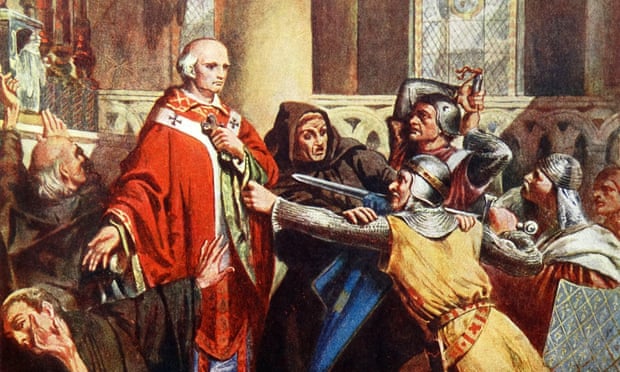
England was in fact faced with all this questions centuries before, when the Crown abandoned the Catholic Religion and chose to create a national Church, subordinated to itself, with the temporal power holding spiritual leadership.
For most British Catholics (and since the victory of Liberalism at the two World Wars, for almost all Catholics) there are basically three possible relationships between Church and State.
The first is Clericalism: as we see now at the UK, the State holds an official religion subordinated to it and ensuring therefore the juridical and economic prosperity of the Anglican Church. The second is Secularism, as in most Western countries: Secularism implies Church and State to operate independently, with the latter ignoring absolutely the social role the former may have. The third is State Atheism: as in China and the USSR, the State actively persecutes all churches, with the objective of erradicating religion from society and asserting the absolute supremacy of a totalitarian state.
Considering State Atheism as inherently immoral, many Catholics feel troubled on whether Clericalism or Secularism may be the best option for the Universal Church. Many Catholic intellectuals have asserted the importance of avoiding a conflict of interests between Church and State, therefore advocating for Clericalism, while others see the Church's ideal situation as complete independence from temporal power.
As in every controversial topic, however, Rome has the last word, and centuries ago, Pope Leo XIII had already proclaimed the official Catholic political doctrine, present in the historical tradition of the Church and in scripture, called Integralism.

Integralism had been first exposed by Pope Saint Gelasius, but was established as doctrine by the Immortale Dei encyclical (1885) by Pope Leo XIII, which also made important contributions to Catholic economics and published other encyclicals condemning political errors of his time.
Integralism implies the existence of two "swords": the temporal power and the spiritual power, what would nowadays mean State and Church. However, Integralism doesn't believe there must be any conflict between them because of a simple reason: the Common Good of the whole of mankind (eternal salvation) is in fact to be pursued by every good Catholic as their higher end. Therefore, it is pointless for a faithful Catholic State led by faithful Catholic rulers to be in conflict with Church interests. Quite the contrary: considering the importance of this ultimate good, the Church and State should cooperate in achieving the eternal salvation of their subjects by a close cooperation in which the State would be naturally subordinated and subdued to the Church.
This idea may seem weird for the modern mind. If the State must be subordinated to the Church, what's even the point of having it? Why don't we just live in a Theocracy like the archbishoprics of the Middle Ages? Well, in fact because the existence of the State is not only willed by God, but also necessary. There are aspects a society needs for its reasonable upkeeping (like a serious economic policy, competent police forces, etc.) which require the existence of a legitimate authority to be implemented. That legitimate authority, however, is not the Church, as organising a national economy or training police officers is not what Christ created it for, but to teach, evangelise, do works of mercy and good deeds, and preach. And similarly, the State was not instituted by God for it to be a competing force with the Church which would interfere with Her duties like educating the people and taking care of the disadvantaged.
All this may sound kind of ridiculous, but let us look at Scripture and History for answers. When the Kingdom of Israel is institued with the Torah as its national law, it wasn't created as a secular institution which would ignore religion and even fight it. In fact, the government of Israel took active part not only in financing public worship, but also in defending the priestly institutions of the Old Covenant. The Law asks society to be organised under strictly religious principles, with a wide number of rites and actions to build the spiritual life of the people which would in fact be patronised by the State.
Let us take as an example the reforms of King Josiah of Judah. Josiah based his kingship on the Torah and is considered by the Bible itself a holy ruler, so we can't really question most of his actions.

If we keep studying Christian History, we may realise most saintly rulers (like Saint Louis IX or Saint Henry) understood their kingship exactly as Josiah did: their main role was the highest spiritual good of their peoples, so they were constantly advised by the Church and were subjected to it not only in a matter of morals but also of actual legal jurisdiction, as the Church held historically tribunals which could judge every Catholic, incluiding unlawful rulers. The Church also had complete co-legislative powers, and could make laws in favour of the people and enforce them juridically. Few people know it, but contemporary sources assert that in pre-Reformation England, for example, people started to work after the age of 14, but that age was downgraded to 3 after capitalism was implemented. Most human or labour rights thought to be achieved by trade unionists in the 19th-20th centuries had in fact been already granted by the Church to her lawful subjects. In fact, peasants could take abusive nobles to the clerical tribunals if they were denied the rights established by the contract which granted them the land tenure.
It was only after the Enlightenment, an essentially anti-catholic movement, when people started imagining a power-seeking State which would try to subdue under its control the Church and every other institution. If we think it carefully, in fact Integralism isn't but what we would expect of any reasonable Catholic: to obey the Church and to seek the greater glory of God and the salvation of their neighbour. It is almost contradicting for a Catholic to rule a mechanism which takes an active role in competing with the Church and desobeying Her teaching.

Therefore Integralism doesn't imply simply a close cooperation between Church and State (as in Clericalism), but an actual subordination of the latter to the former. Let us take the Nordic Countries as the clearest example. Theoretically, Denmark and Norway are Clericalist states, and Sweden was until a couple decades ago. And still, all of them have had early and deeply liberal legalisations of abortion, and are now the most "advanced" on "gender issues". Not even to mention their virtual colonisation by immigrants of muslim origin who would gladly establish a Sultanate if allowed to.
Why does this happen? Because Clericalism implies the State to cooperate with the Church as institutions, but not from the perspective of sincere faith and commitment. The clericalist State helps the Church because it is legally compelled to do so, but will do everything possible to asserts its dominance and independence, refusing to acknowledge the Kingship of Christ over him. Clericalism is an hypocrite regime, which profits from the Church but which doesn't recognise the Lord as its sovereign ruler. And we don't even have to mention England, in which for some reason the King thinks he may rule over the Church as if he was Jesus. With this imperium of the secular over the spiritual, societies lose their deep spiritual meaning and religion becomes just a bureaucratic aspect of social life.
A Catholic Integralist state would never, using the former examples, legalise abortion. And this happens just because all its policy is oriented to obeisance to orthodox Church teaching. There are plenty of encyclicals and papal documents or pronouncements on almost every aspect of political life. Clericalists ignore them, but Integralists, who seek the highest glory of God and the salvation of the nation, would make Church doctrine the fundamental national law. As already mentioned King Josiah did, an Integralist State would permentently consult the local Church for guidance and counsel on most matters. Similarly as England now works, an Integralist State would most surely not need a codified constitution, but would have an uncodified amount of local administrative laws. However, along with these the State would also obey unconditionally to the fundamental laws of all Humankind: the Gospel and Church teaching.
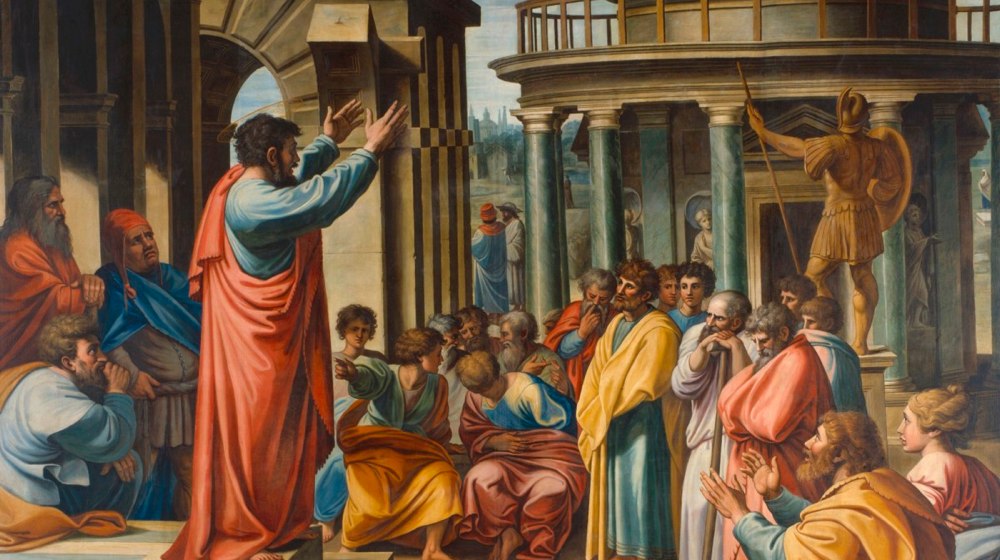
But Integralism is not only reduced to the subordination of the State to the Church, but also asks for a general subversion of the anti-christian liberal order. Many policies we see nowadays as reasonable or basic are in fact pointless and undesirable for an Integralist State. For example, the Enlightenment and the Reinassance taught that the State should strive to centralize power to the ultimate extent, supressing every form of local autonomy. This makes sense for a Modern State that wants to get as much power and wealth as possible in order to subdue society to its interests. This isn't, however, desirable for a State that understands itself just as another gear in the engine of human salvation and that doesn't have as a goal to assert its supremacy over older social institutions. The whole concept of the Modern State is developed over a dangerous premise: that power struggle is inevitable, and that as long as the State is superior to the Church or other social institutions, they shall be fought against and supressed. Therefore the Church and the trade guilds should be subdued, local cultures should be annihilated and as many social aspects as possible (education, art, etc.) should be left in the hands of this all-powerful Leviathan.
Another clear example of this is the Modern conception of Parliaments and politicians. The traditional order had parliaments in the whole of Europe, but members were chosen organically (based on the representation of social institutions and autonomous communities) and not according to suffrage, and communes were greatly autonomous and functioned largely through direct democracy. This had important advantages we aren't developing on now. Probably the most important aspect to consider in this modern switch, however, is the fact the role of politics was seen as pragmatic back in the day, while now it is dogmatic. The political decisions taken historically were essentially a matter of the conjunctural situation. Take building a road as an example. It isn't a matter of ethics and philosophy. The debate is simple: will the town profit from this new road? Politicians took pragmatic decisions: their powers were circunscribed to actions. Contrastingly, the Enlightenment has taught Europe that men can decide by themselves what's good and bad, and that religion and tradition have nothing to do with politics. Therefore, human beings were to create their own laws and to build a humankind free from the action of God (this was the explicit objective of, for example, Kant and Voltaire). So our politicians and elected parliaments now take dogmatic decisions: they debate on morals and ethics and define those rules for our society. When politicians debate on abortion, for example, they are not discussing a contingent conflict experienced by the country: they are actually setting moral values for the future. An Integralist State would never debate on abortion because Church teaching would never allow it to be implemented. But modern parliaments seek to build a godless world, and their role is defining those rules that shall become the new religion.
Comments
Post a Comment